
Photographing Loons in Vermont: How to From Real Experiences
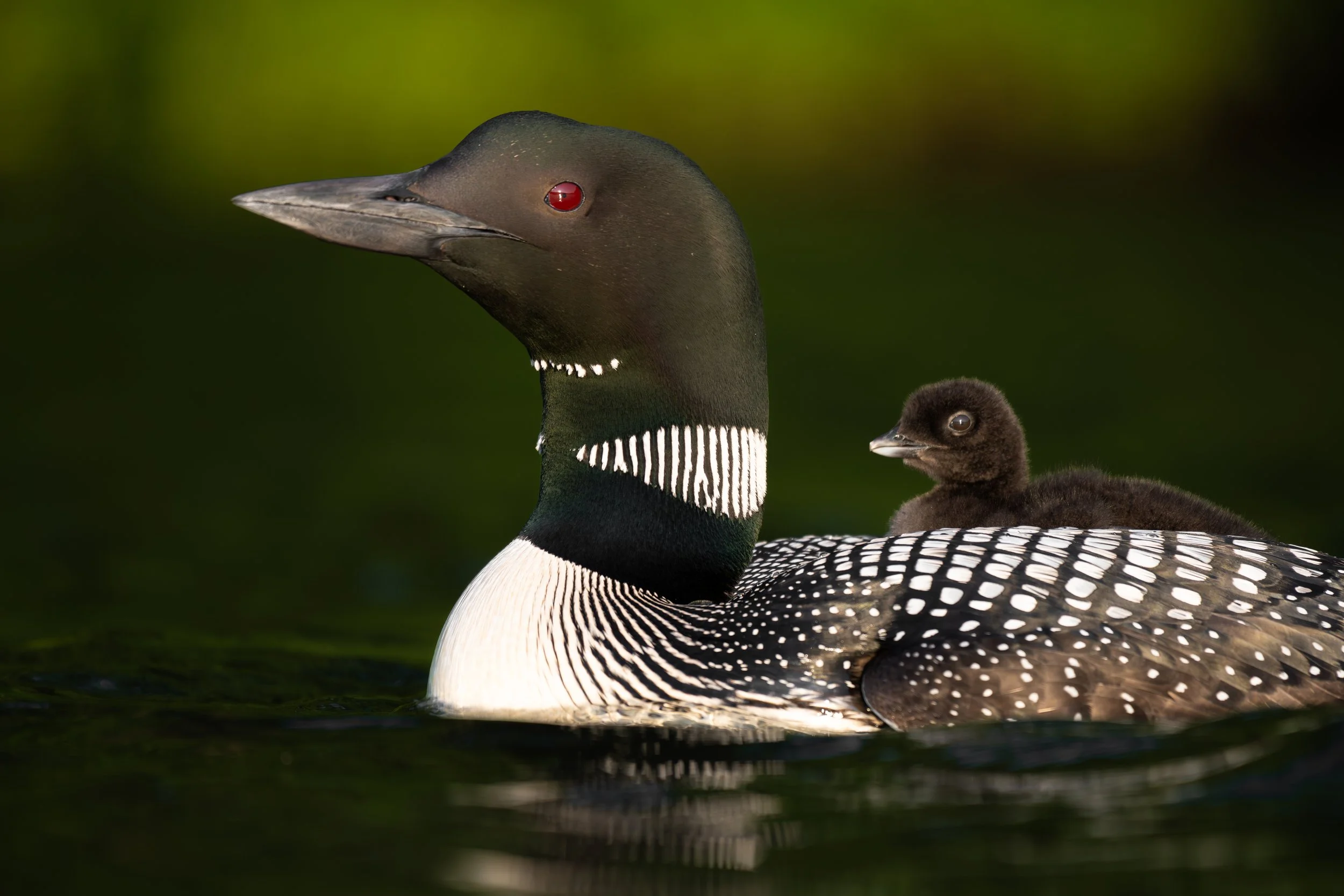
I want to begin by emphasizing the importance of photographing and viewing loons properly. Wildlife deserves our respect and plenty of space. That being said, there is nothing more magical than spending time with these incredible birds. That’s why I want to teach you how to do it properly, should you want to try your hand at photographing them!
Note: Harassing Common loons is a crime in Vermont under the federal Migratory Bird Treaty Act which can result in fines up to $5,000 and 6 months in federal prison. DO NOT approach a nesting loon, keep a large distance and let them do their thing during this time. Getting too close can cause them to abandon their nest!
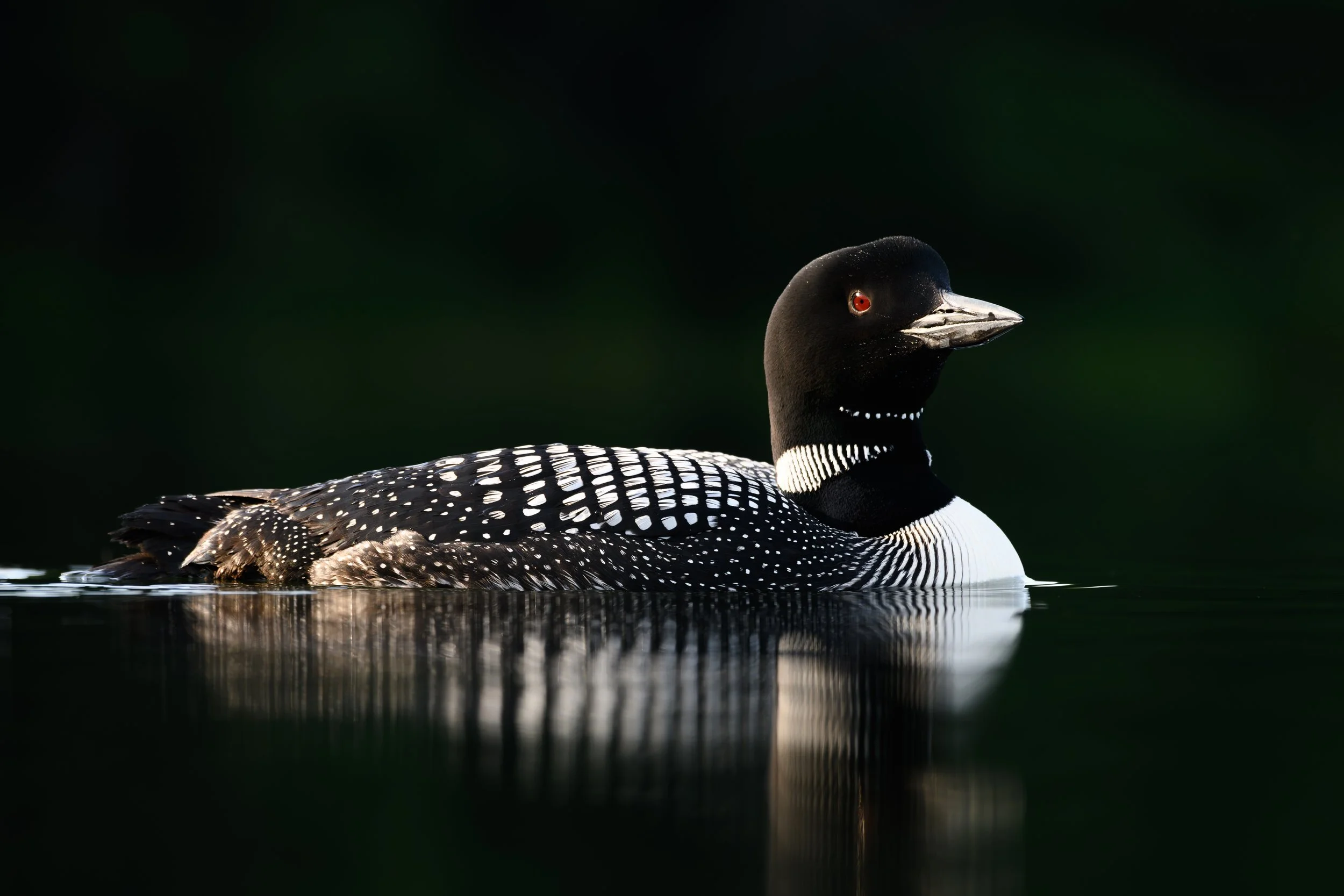
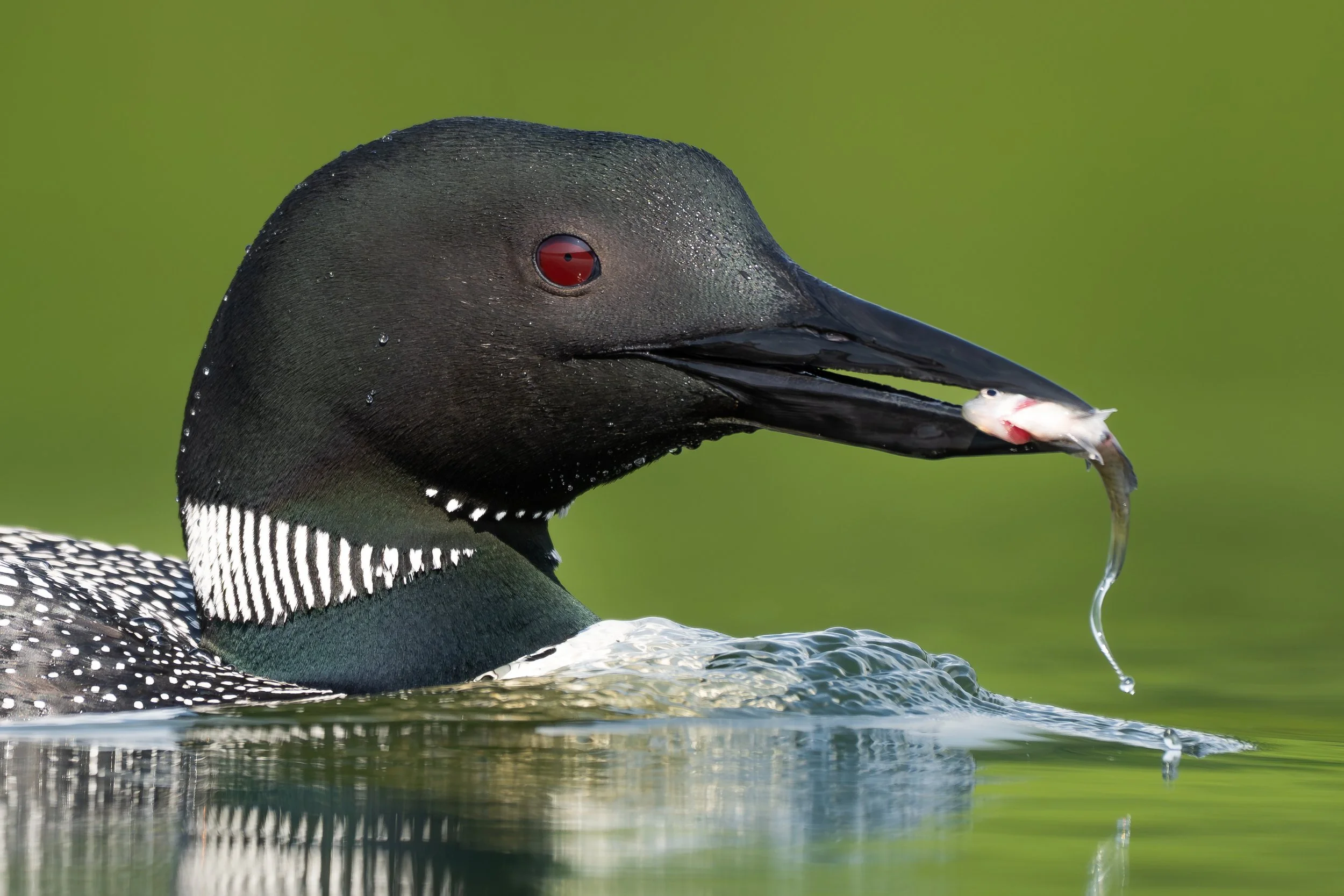
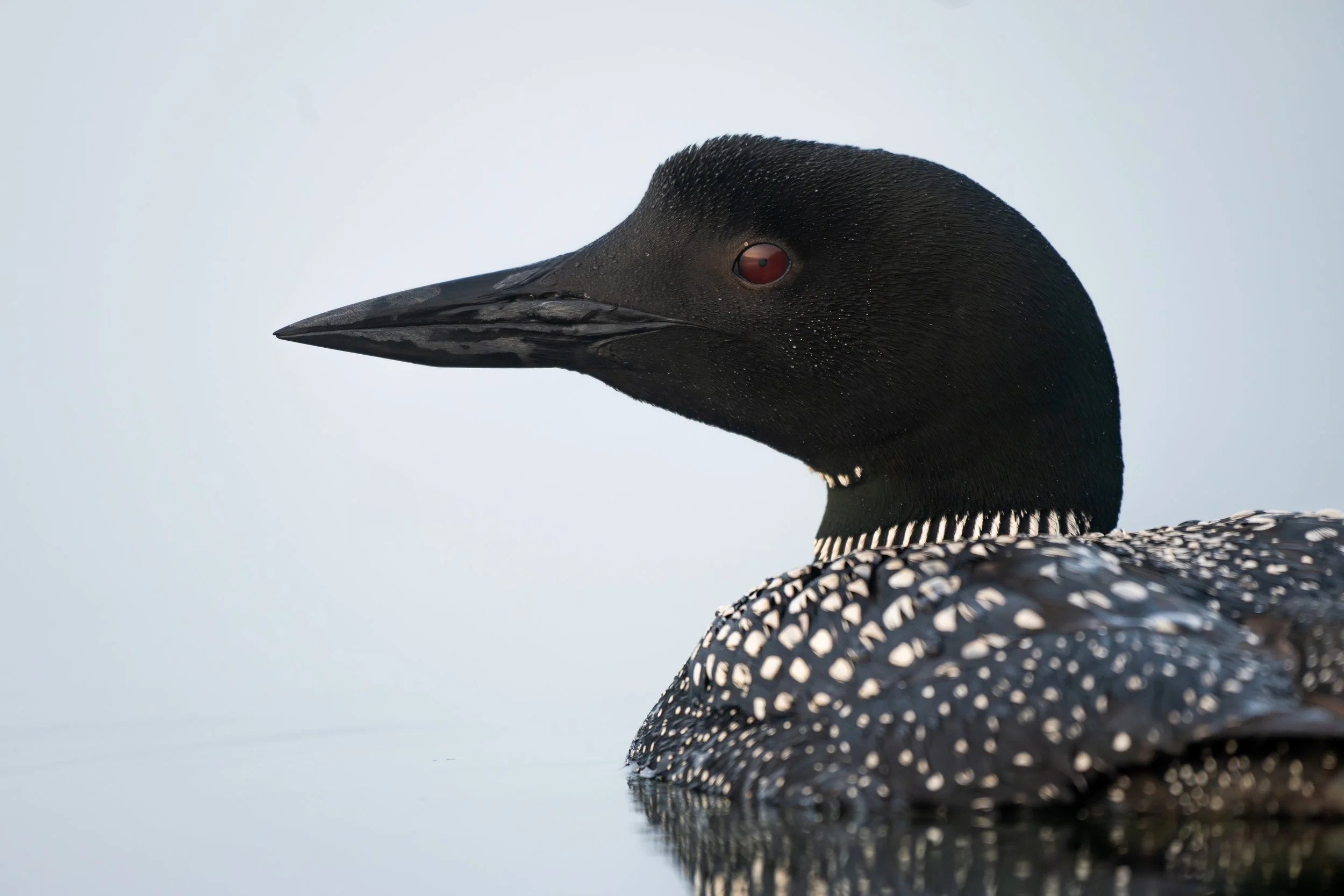
BEST TIME OF THE YEAR: MAY TO AUGUST
During this time, loons return to our large ponds and lakes to display their beautiful black and white breeding plumage, mate, and raise their chicks. Of course, this time is also some of their most stressful so let's first look into signs of stress and disturbance before heading into how to best photograph them.
SIGNS OF STRESS AND DISCOMFORT:
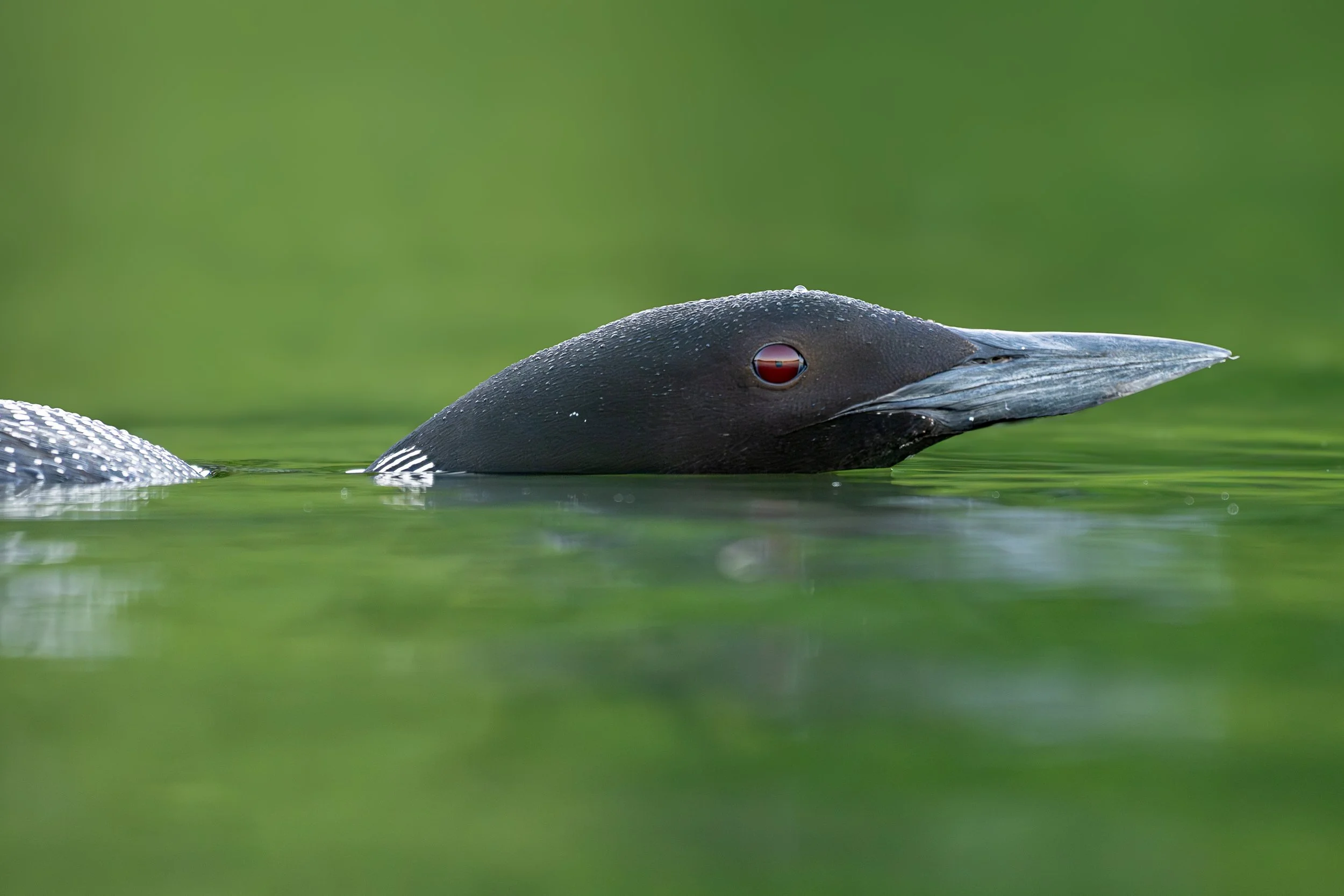
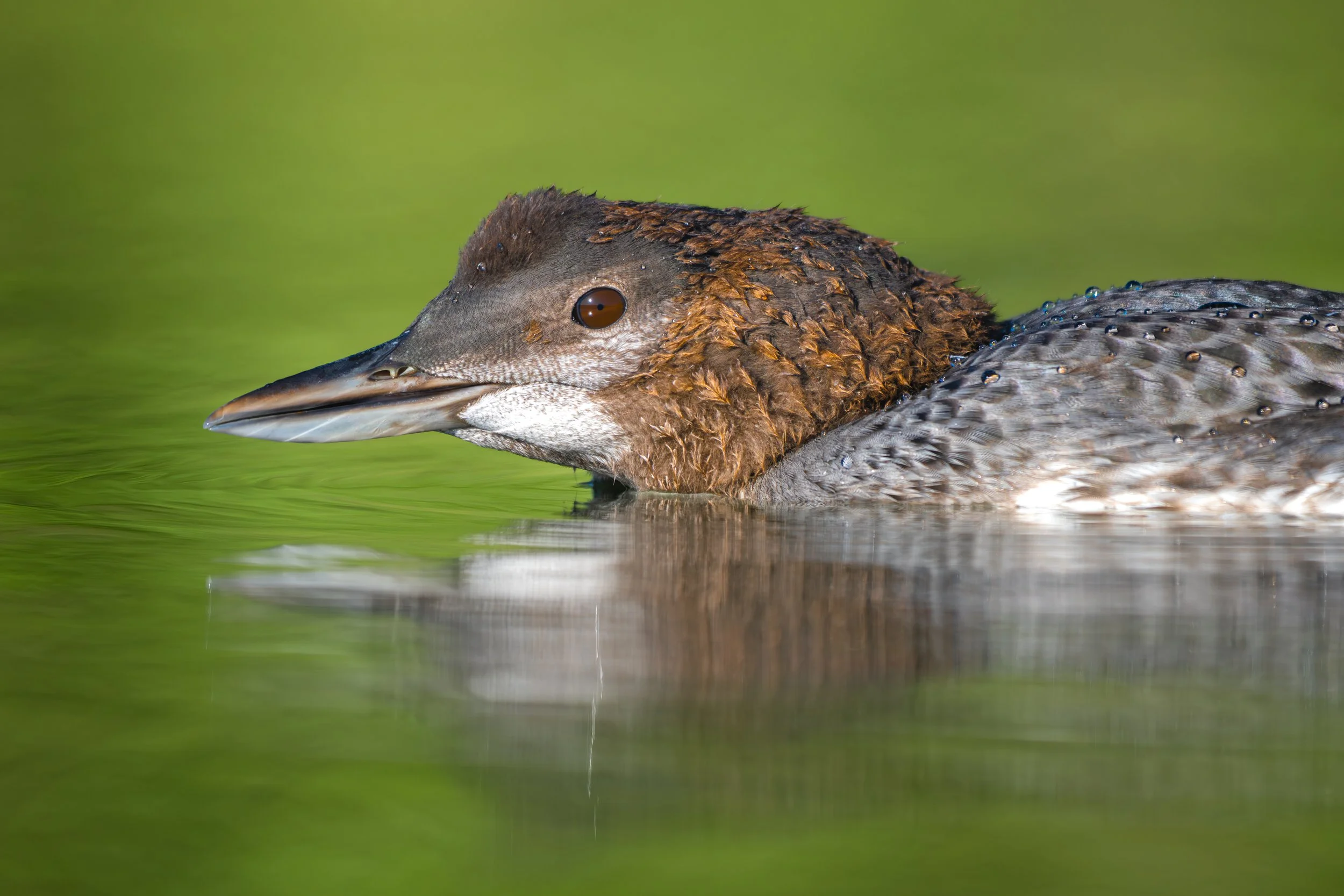
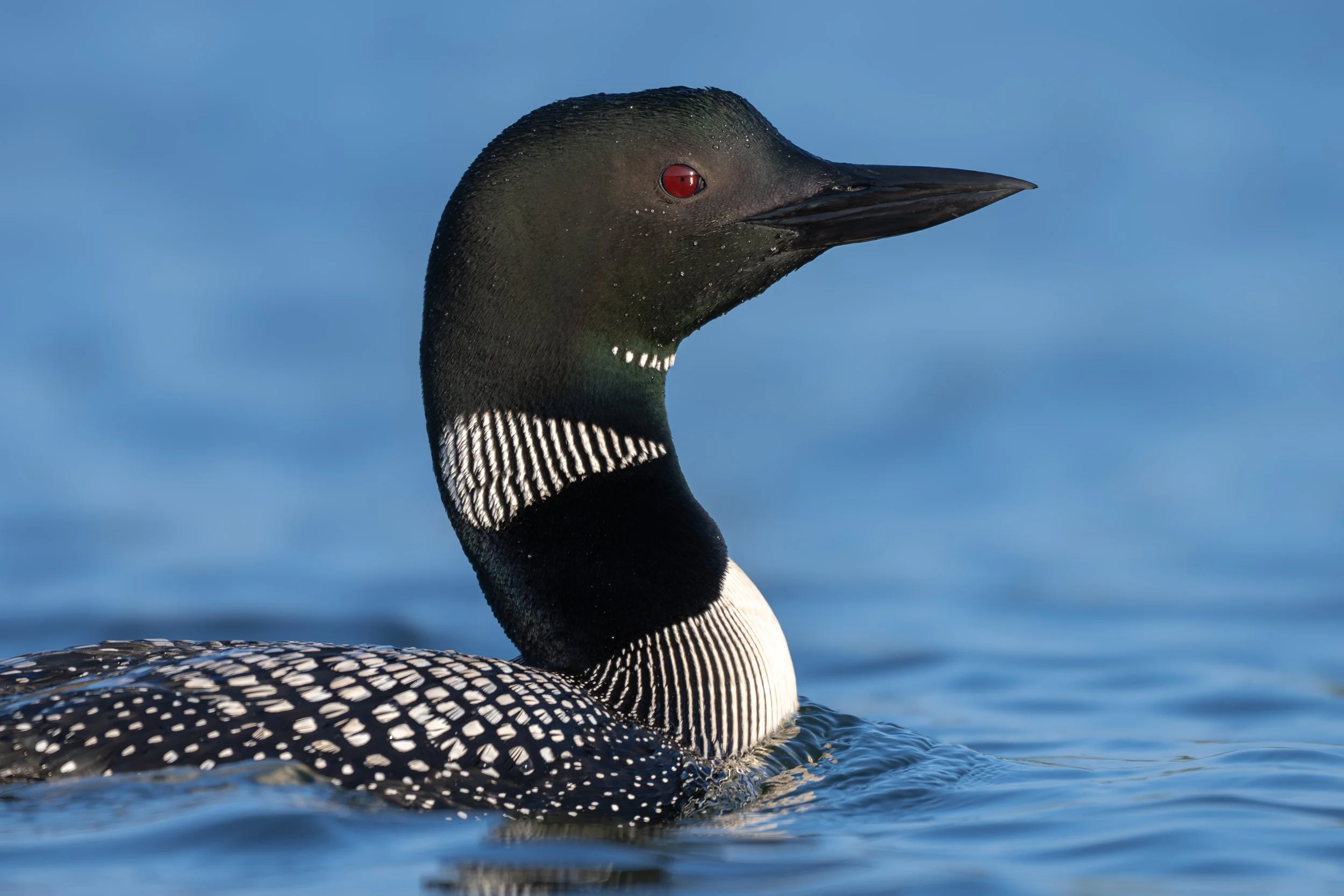
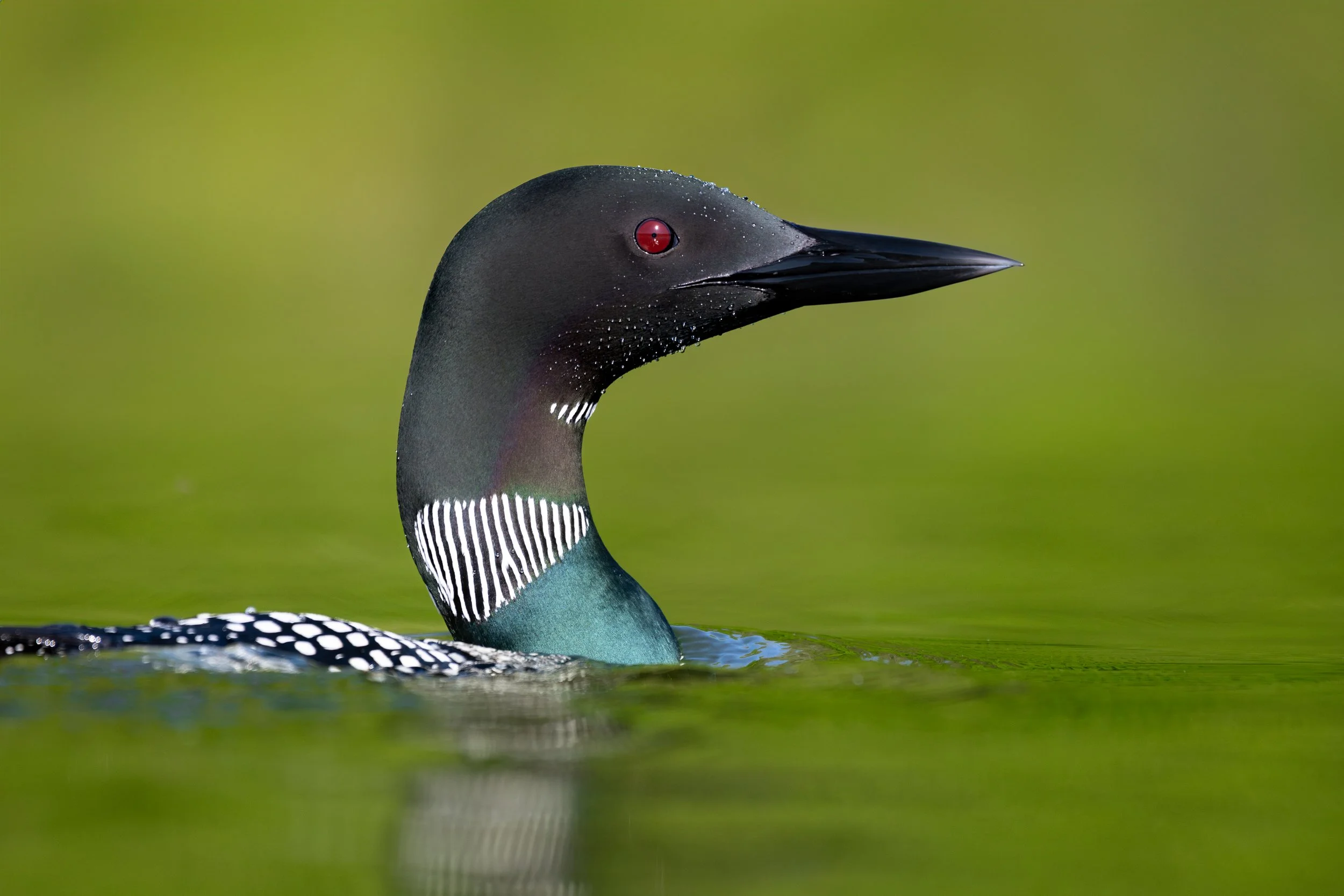
#1: Where are they looking
The first sign of stress is an easy one to ignore but is the most important! Like any wild animal, loons become aware of your presence as soon as you enter their environment. Some level of alertness is inevitable, but you can minimize the stress you cause.
Imagine you are walking in public and you pass people, most of them you likely notice but don’t give a second thought, but what about that person who walks straight in your direction. You instantly become aware of them and you probably get more and more nervous as they approach. Your stress level was directly correlated with how close that person was to you, the closer they were the more stressed you were.
This is the same thing that happens to a loon when you approach them. If they’re looking at you frequently, they’re trying to determine whether you’re a threat. Frequent attention is a sign that your presence is causing stress.
#2: Head Posture
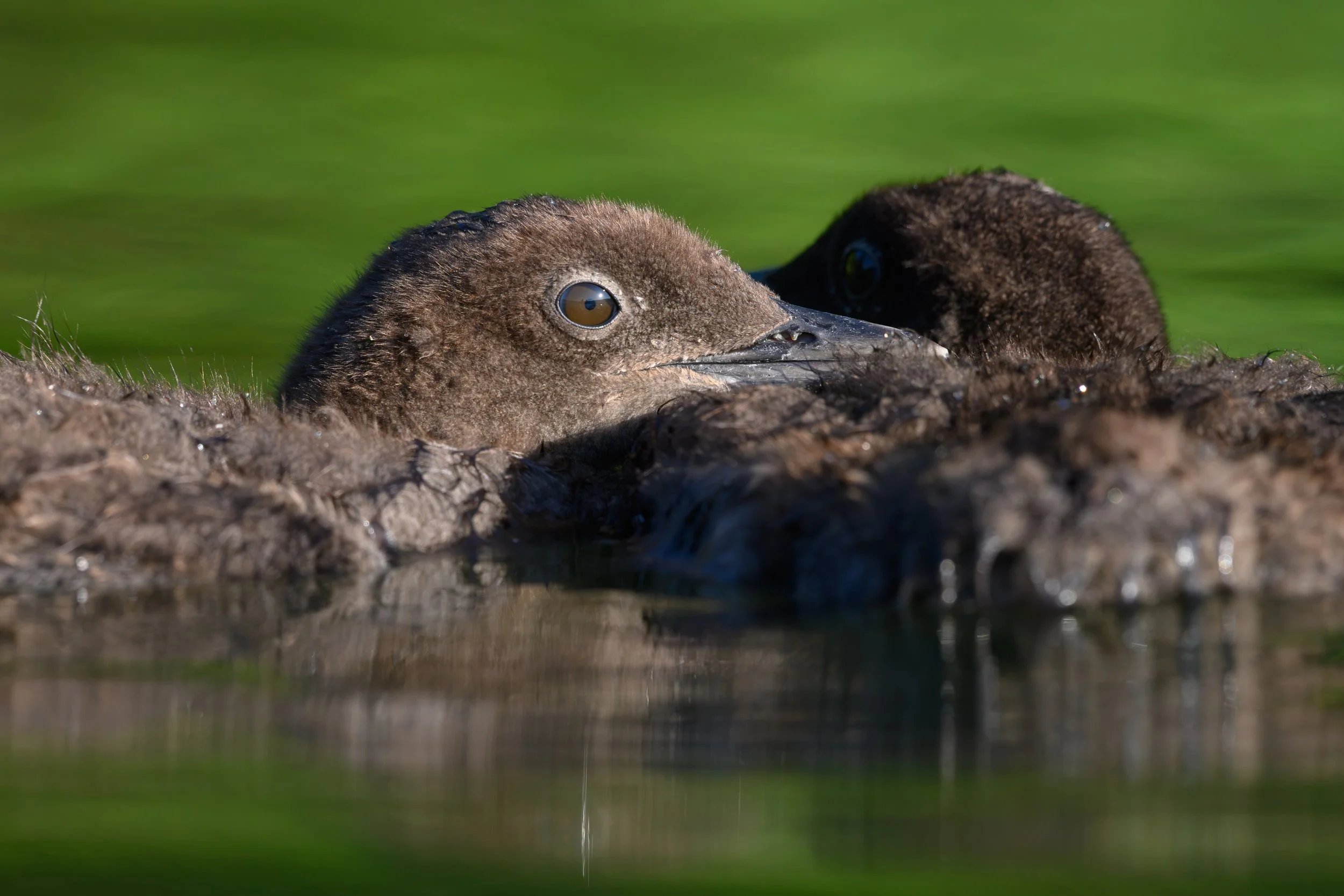
Loons can exhibit two different head postures to communicate stress. The first is lowering their head as low into the water as possible, something I call submarining (2 left most images above). They do this in order to appear as small as possible and also allow them to quickly dive underwater to avoid whatever it is that is scaring them.
In the case of the image I captured of the loon “submarining” it was a molting chick which I believe was practicing diving. It had been left with me as the parents went off and did their own thing. It would come up only for a short period before diving again and again. I think because it had molted out of its baby down feathers, it was finally able to actually dive as the down feathers helped it stay afloat. But occasionally this little guy would pop up a little closer than it had expected thus submarining before diving and reemerging at a more comfortable distance. The left most image was captured when a double-crested cormorant flew in nearby, ultimately perching on driftwood nearby. Threatened by this new intruder the adult submarined as it assessed the situation.
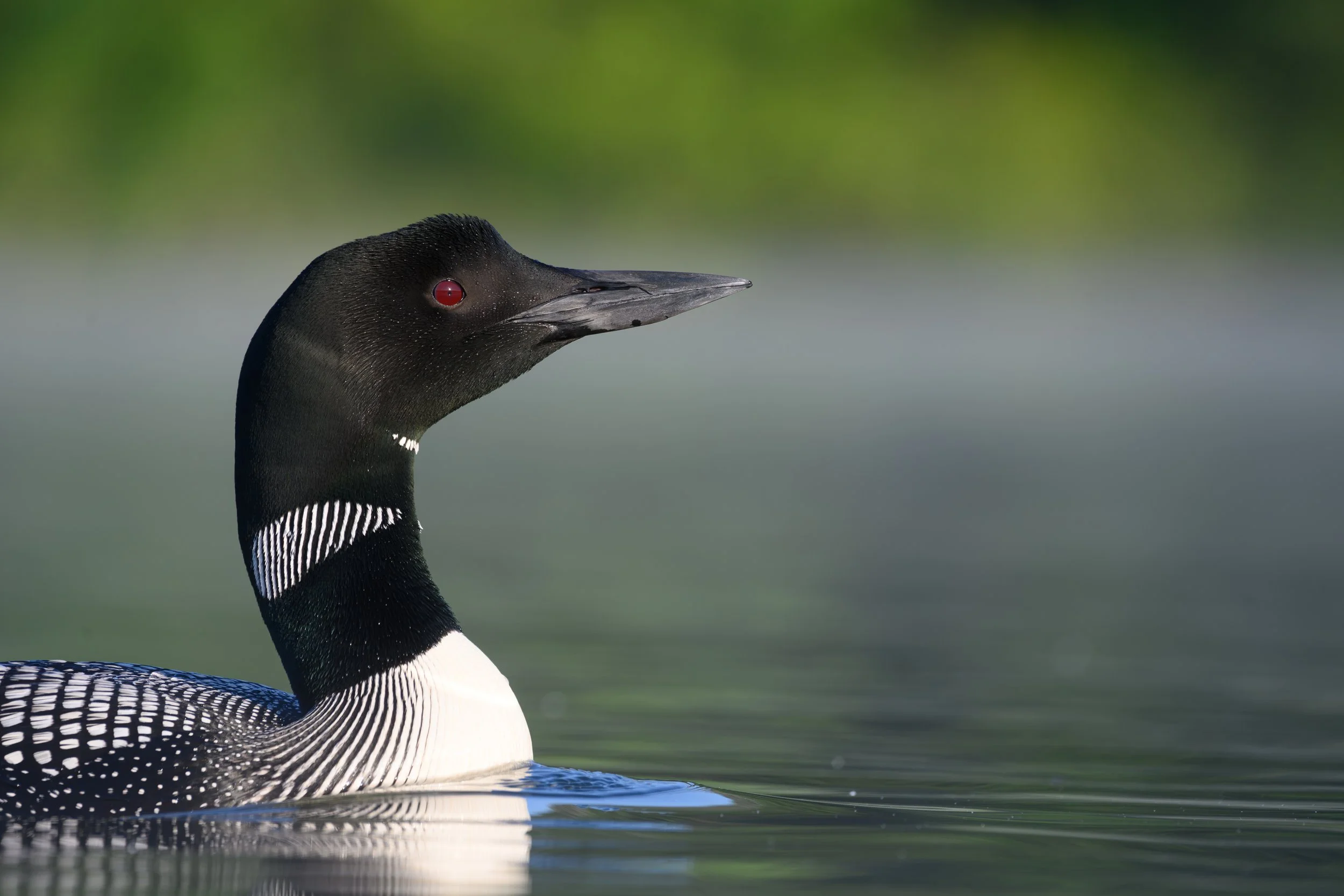
The second head posture is called “craning”, where the loon extends their neck! If you pay close attention a sign of extra high stress is when the loon pulls its feather close to its body as you can see in the right most images above. That was an intruder loon who was battling the established pair underwater before popping up right next to me in my kayak.
The next stress response often goes hand in hand with head posture: vocalizations!
#3: Vocalizations
A loon’s primary form of communication is its calls which they will frequently use, just about all day but especially to communicate their stress levels. They have four main sounds: wail, tremolo, yodel, and hoot. It is important to know each of the calls as they are all used to communicate with each other but also to everyone else.
The wail is their most iconic and is used to communicate locations to other loons. They will likely use this call when they want their mate to return. This can indicate only mild stress, but beware that it may also signal increased pressure.
The tremolo is the most important call to learn as this is their most used distress call. Hearing this is a good sign that you have gone too close and must back off. However, be aware of your surroundings as they will use this call for anything that causes them stress including passing predators such as eagles or other intruding loons (Fairly common) and I have even seen them use this call as a beaver approached them. Nonetheless, you should back off until you can assess the situation and try to give them time to readjust.
The yodel is another important call used mostly by the males and is a loud, complex, and highly aggressive call compared to a car alarm.
The hoot is a call used to communicate short distances typically reserved for their mates and chicks.
Photographing Loons:
STEP 1: VIEWING LOONS
With the signs of stress in mind, now you can begin viewing and learning their behaviors first hand. Viewing them from a kayak with binoculars is the best way to begin learning. Learn how to distinguish their calls and learn where they like to hangout. Loons hunt fish and crayfish and thus remain close to shallow water near shorelines and like to sleep and relax more in the centers of their bodies of water. Do not rush this process, while you are learning them, they are also learning you! Show them that you are safe and not a predator, this takes time and does require you being within eyeshot of them. If you’re lucky they may even swim over to you as they are very curious birds (It's one of the things I love about them!)
Don’t worry if you want to take photos, there are plenty of incredible images you can capture from a safe distance during this process!
STEP 2: SHORTENING THE DISTANCE
After a few sessions begin slowly shortening the distance, look where they are looking. If they are staring at you, they are stressed. Aim to be at a distance that they can see you but are only rarely looking at you. Slowly shorten that distance over several sessions always keeping that in mind. Realistically you should be able to get relatively close, definitely close enough for any camera and binoculars, by never crossing the line into the second or third stress sign. That being said, you will most likely still see those other stress signs, they just won’t be directed at you!
Predators are always part of the environment and they will fly past. In fact, every single one of my images I’ve shown you of the different stress sign, I had managed to capture because of other birds, including loons appearing. Remember, back off first and then assess the situation (Sometimes, it is very clear what is stressing them out, but it is still best practice to give them a bit more space to give them time to lower their stress as much as possible)
Finally, this process is always ongoing and takes weeks, months, or even years! Loons are long-lived birds that can live up to 20 to 30 years and will return to the same body of water to breed with the same mate every year! Rushing this process can harm or even kill these beautiful birds so please don’t rush, they will always be there next year!
STEP 3: CAPTURING BREATHTAKING IMAGES
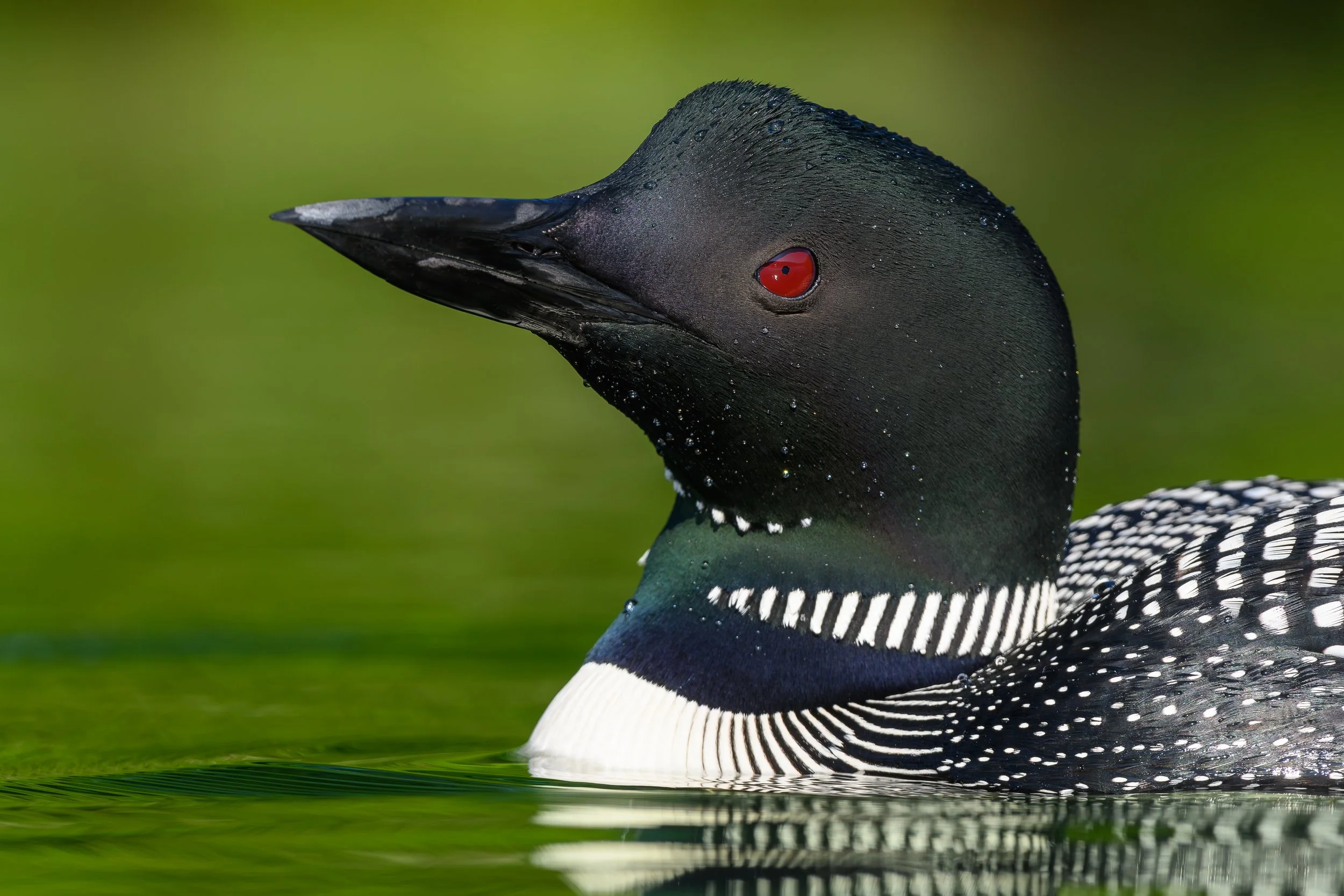
Once loons are comfortable with your presence, you can capture beautiful portraits! Below I’ll go through the steps I take when I head out to capture photos!
Step 1: Time of the Day
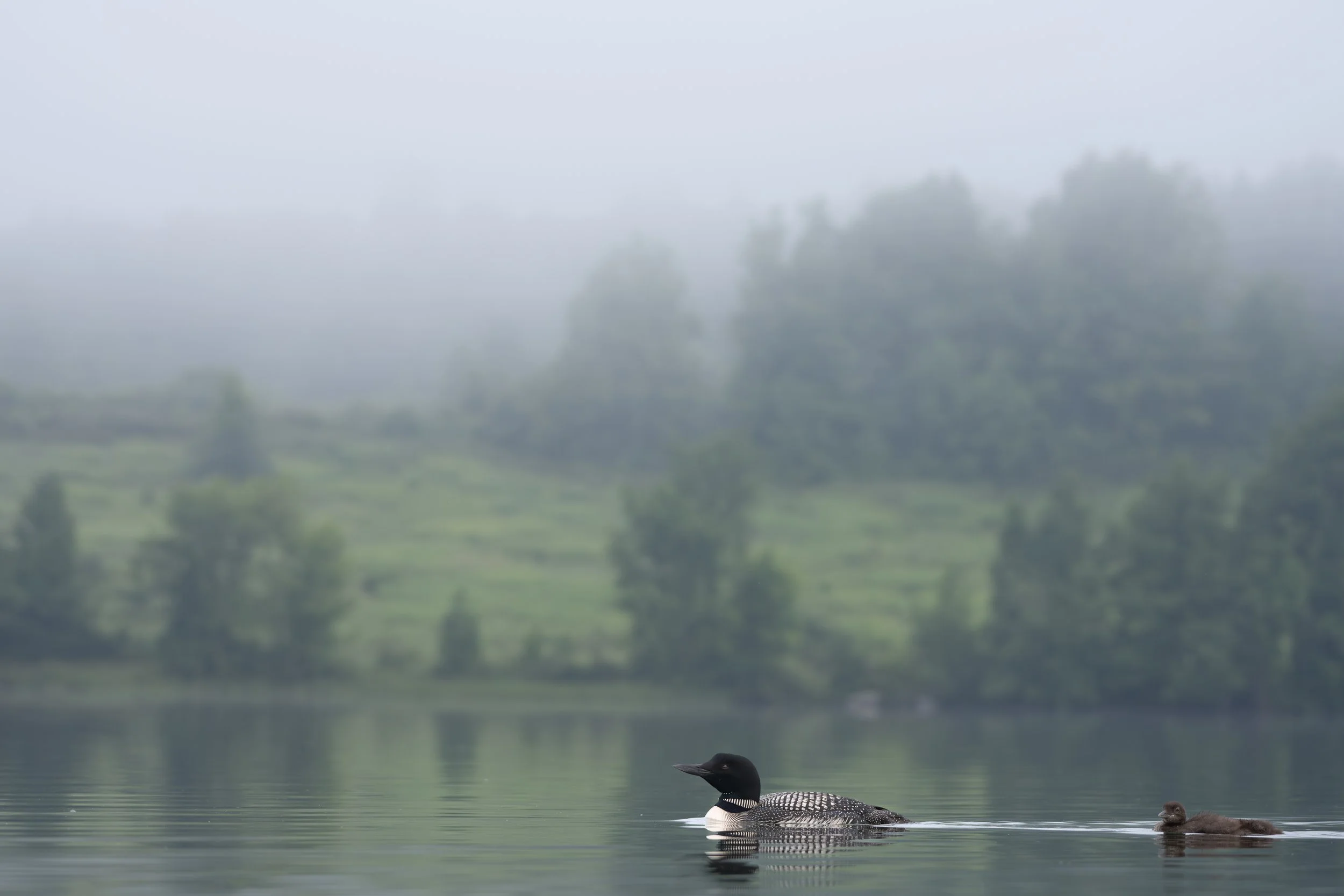
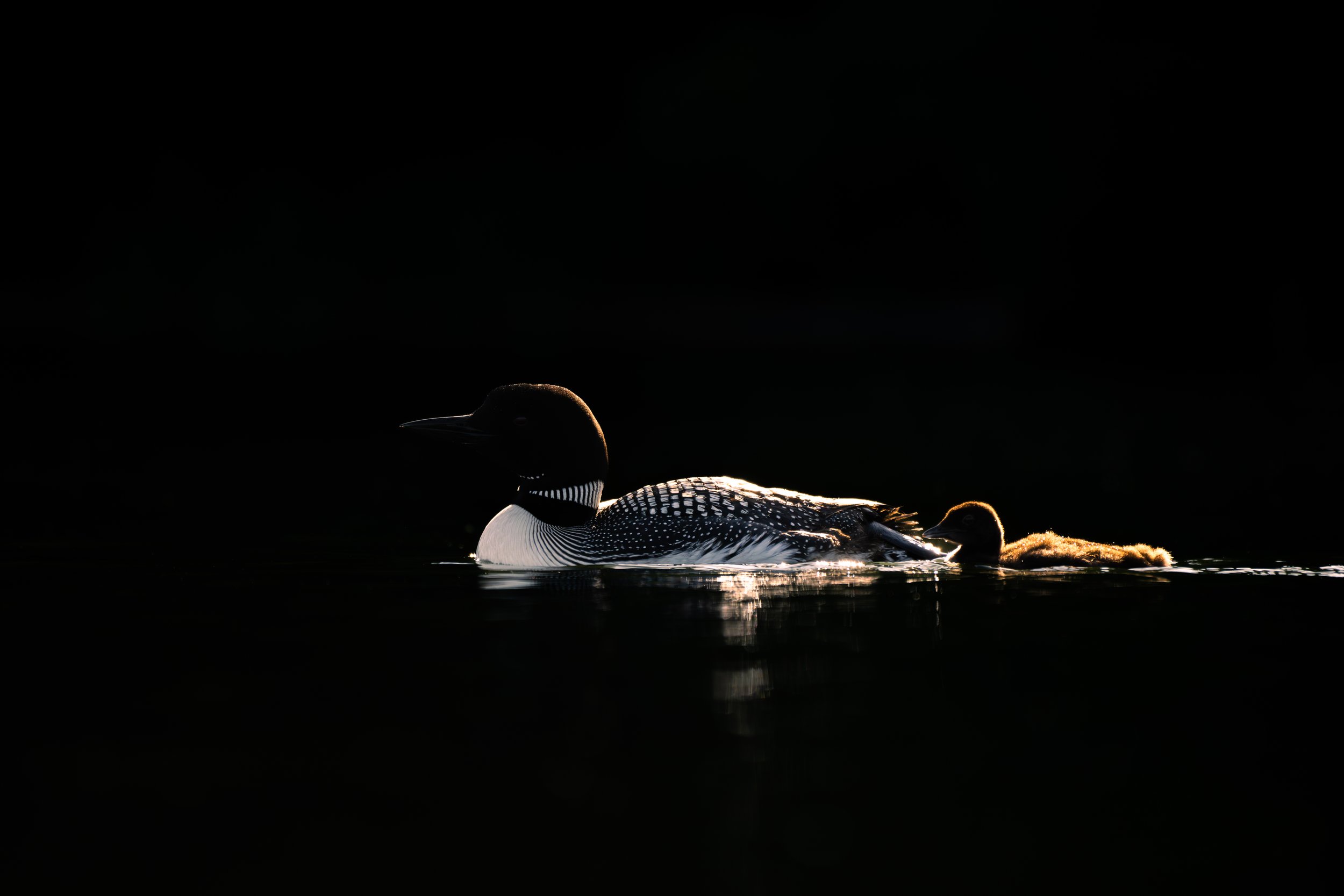
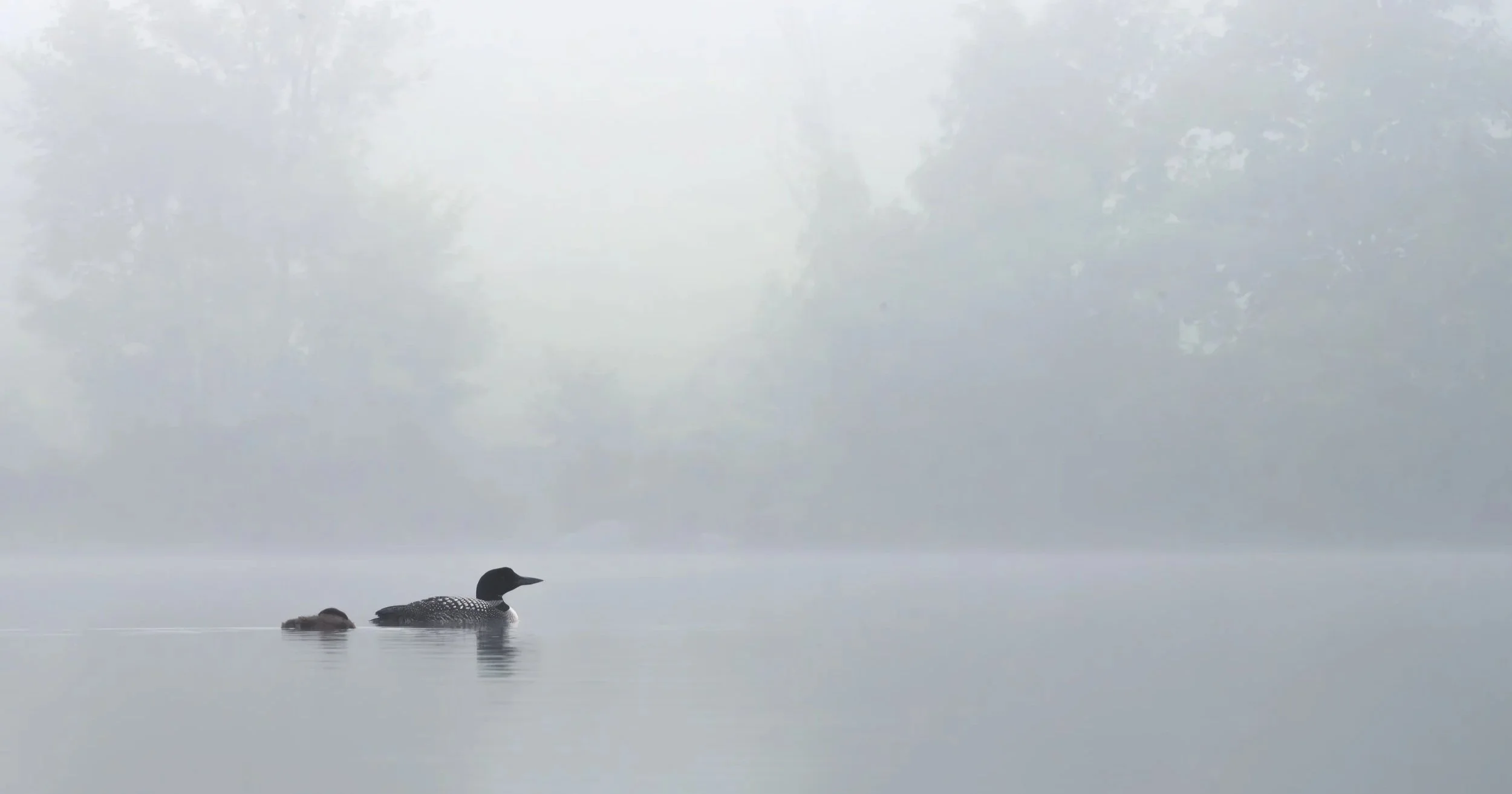
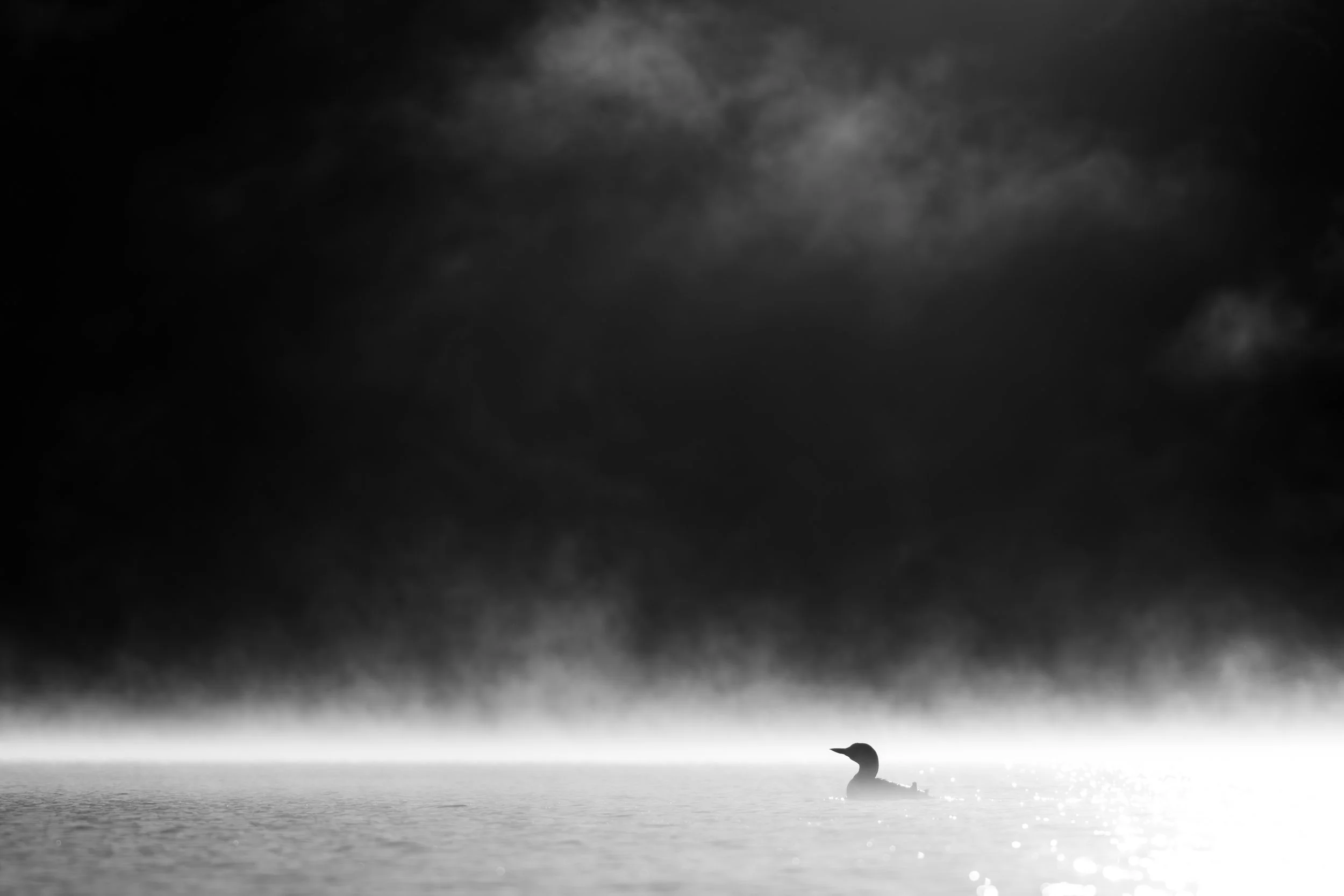
Sunrise and sunset are the best time of the day to photograph loons. Personally, my favorite is the morning as this tends to be when you get the most unique conditions (i.e fog), witness more unique behavior as they are more active, and can get that amazing golden light. However, depending on the direction of the body of water and the resident loons behavior, sunset could be better. My favorite family of loons that return every year like to hunt and relax on the western coastline of a local pond thus making it best for sunrise as the sun rises in the east casting wonderful direct light on them!
Step 2: Weather
Choosing the correct weather to photograph loons is the most important step to capturing the best images. I’d argue that most photographers would agree that the best conditions to photograph loons in are mornings that are cool with as little wind as possible. Wind speed and direction are what I look at before deciding what days to head out. I aim for wind below 5 mph with 0 mph wind being ideal.
Not only does wind cause waves which can be distracting in your photos but it also makes it tough to control your kayak. Unfortunately, I have accidentally had the wind blow my kayak too close to loons before. Luckily these loons had been fairly adjusted to me but it still was definitely a source of stress that should be avoided. Ultimately, mistakes happen but we want to do our best to avoid them and choosing the correct weather to have the most control over our kayak is part of the puzzle.
Wind direction is also a consideration but the most and least ideal directions are dependent on the body of water you are visiting. I’ve found that going out on different days and taking note of wind speed and direction helped me a ton on figuring out the most ideal conditions for different bodies of water.
Step 3: Decide What Image You Are After
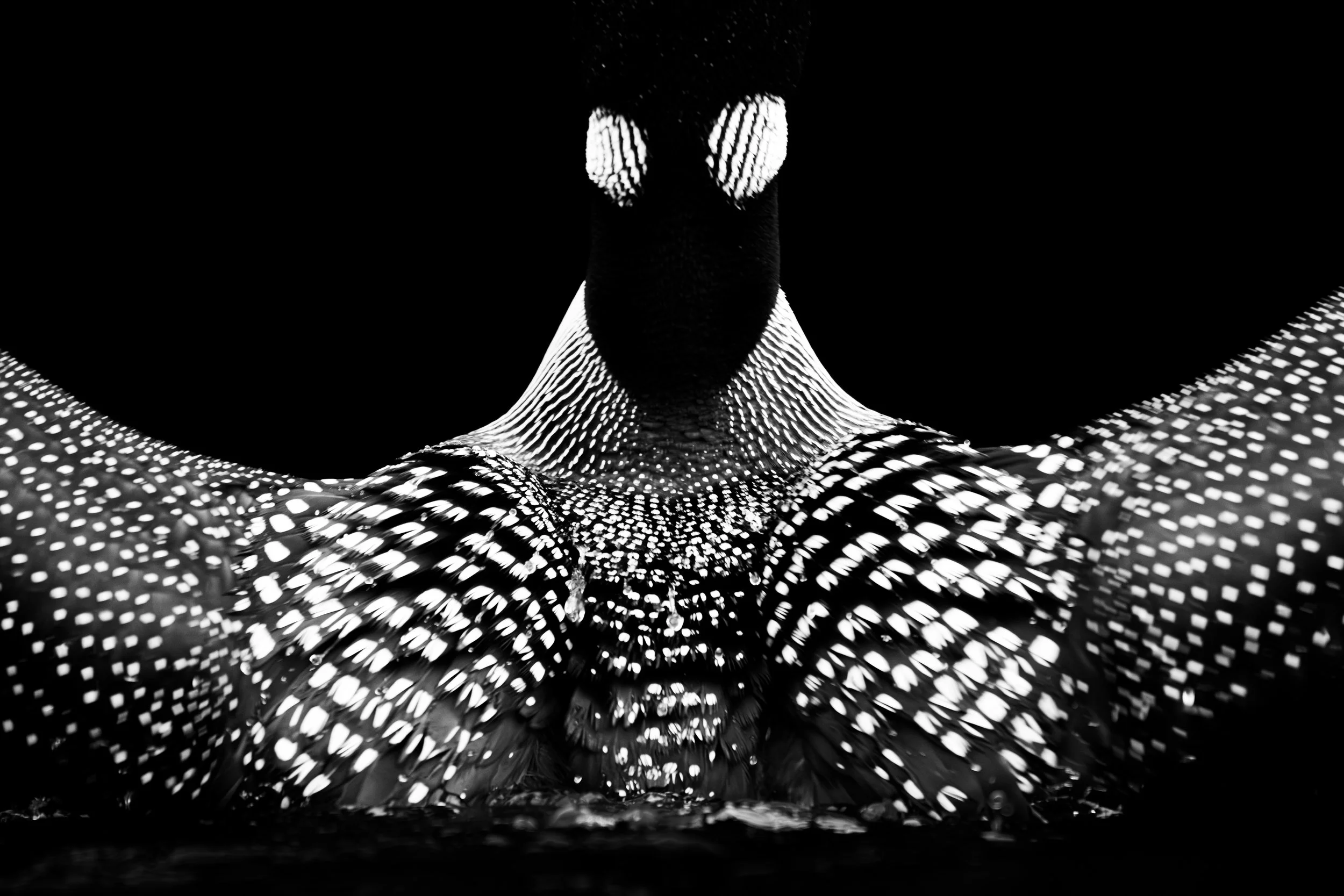
Going out with an image in my mind is a great way to start as it allows you to set yourself up for success. For me I’m almost always chasing a better portrait. It’s the type of photography I love the most so of course it’s the images I’m always after. Ninety percent of the time, I’m set up long before sunrise with the path of the rising sun at my back, facing the loons. That way once it rises I will immediately be in the best spot to capture it. However, sometimes other circumstances arise and it is crucial to adapt. As long as you are not bothering the loons there’s no single right way to approach wildlife photography so get creative and enjoy!
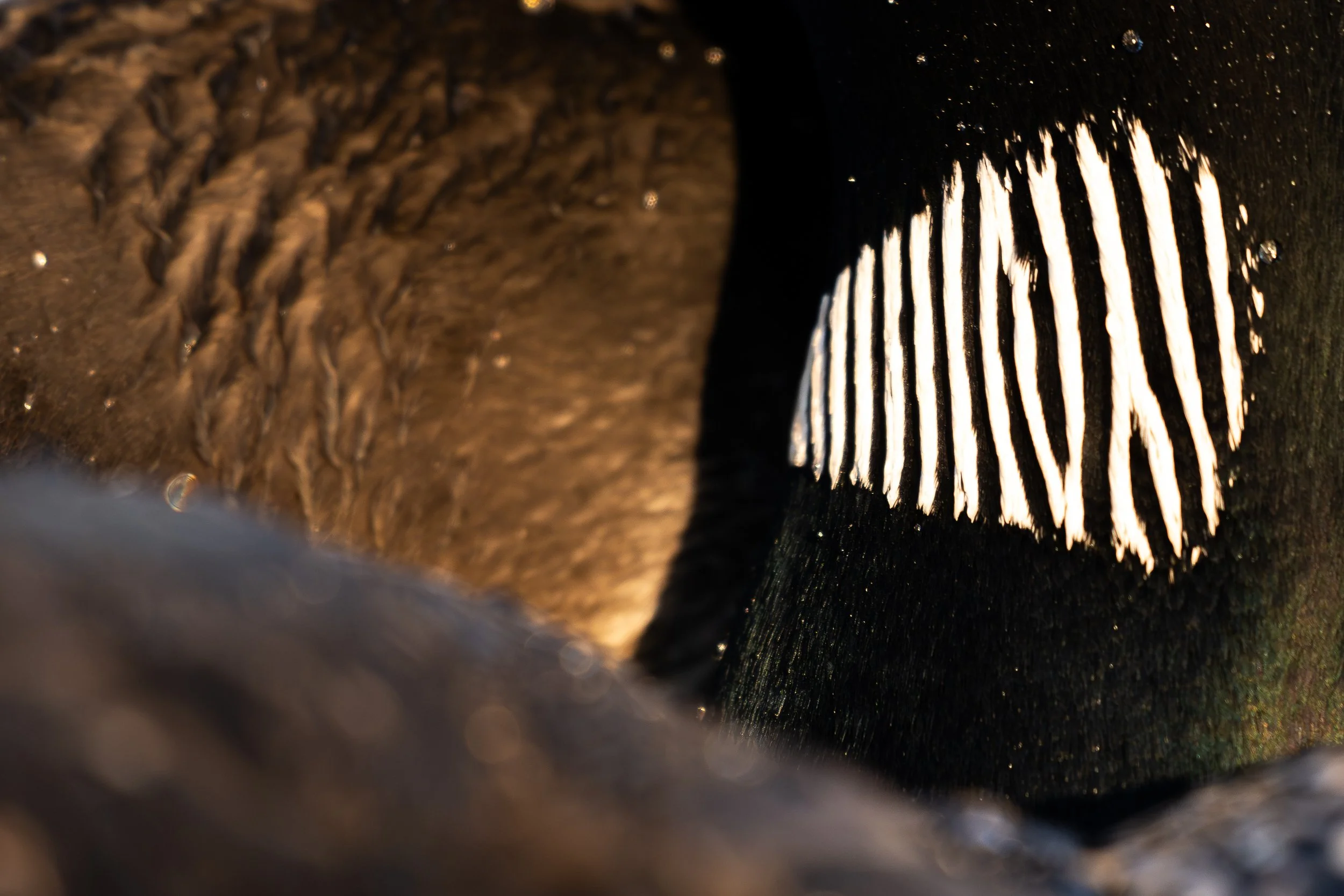
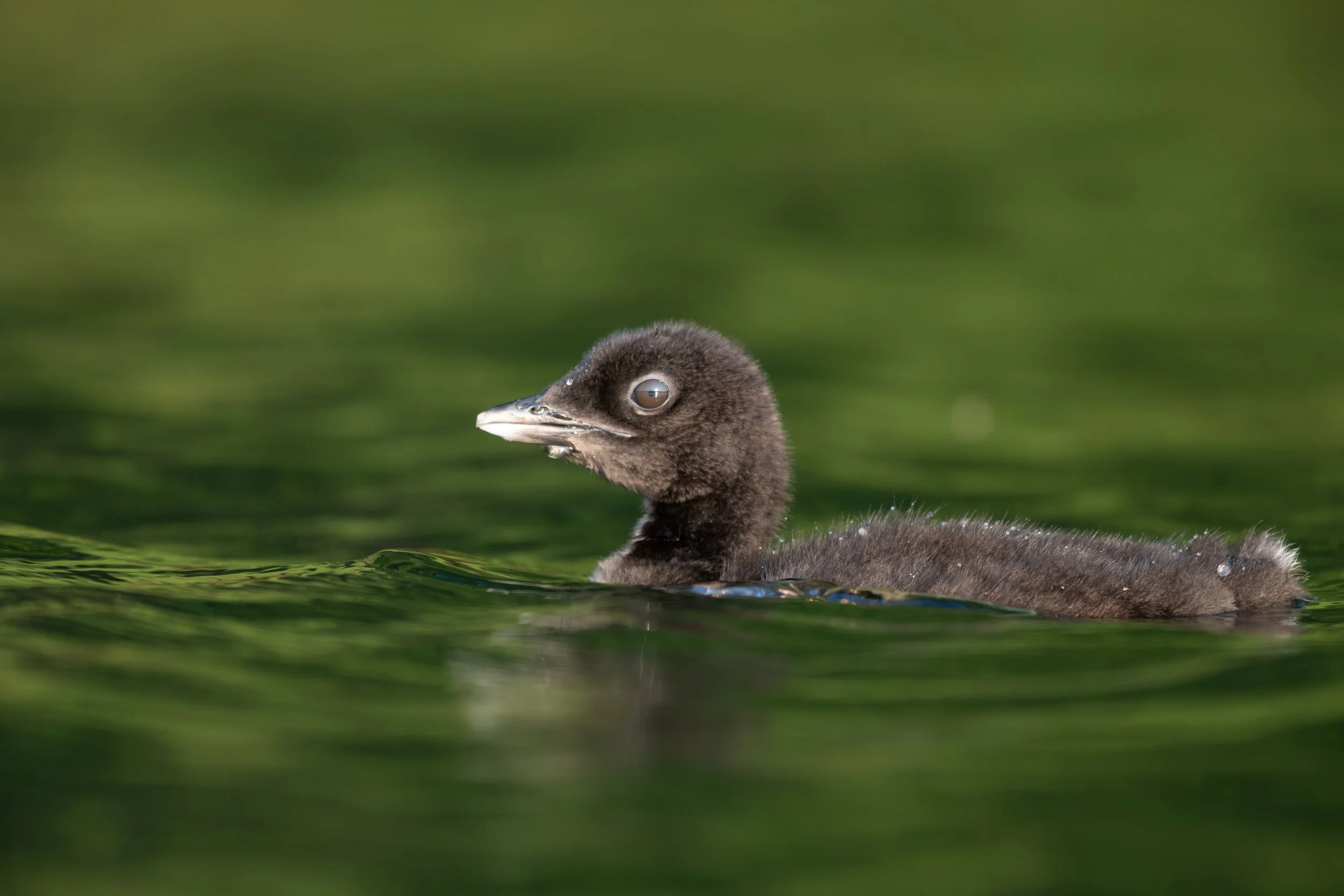
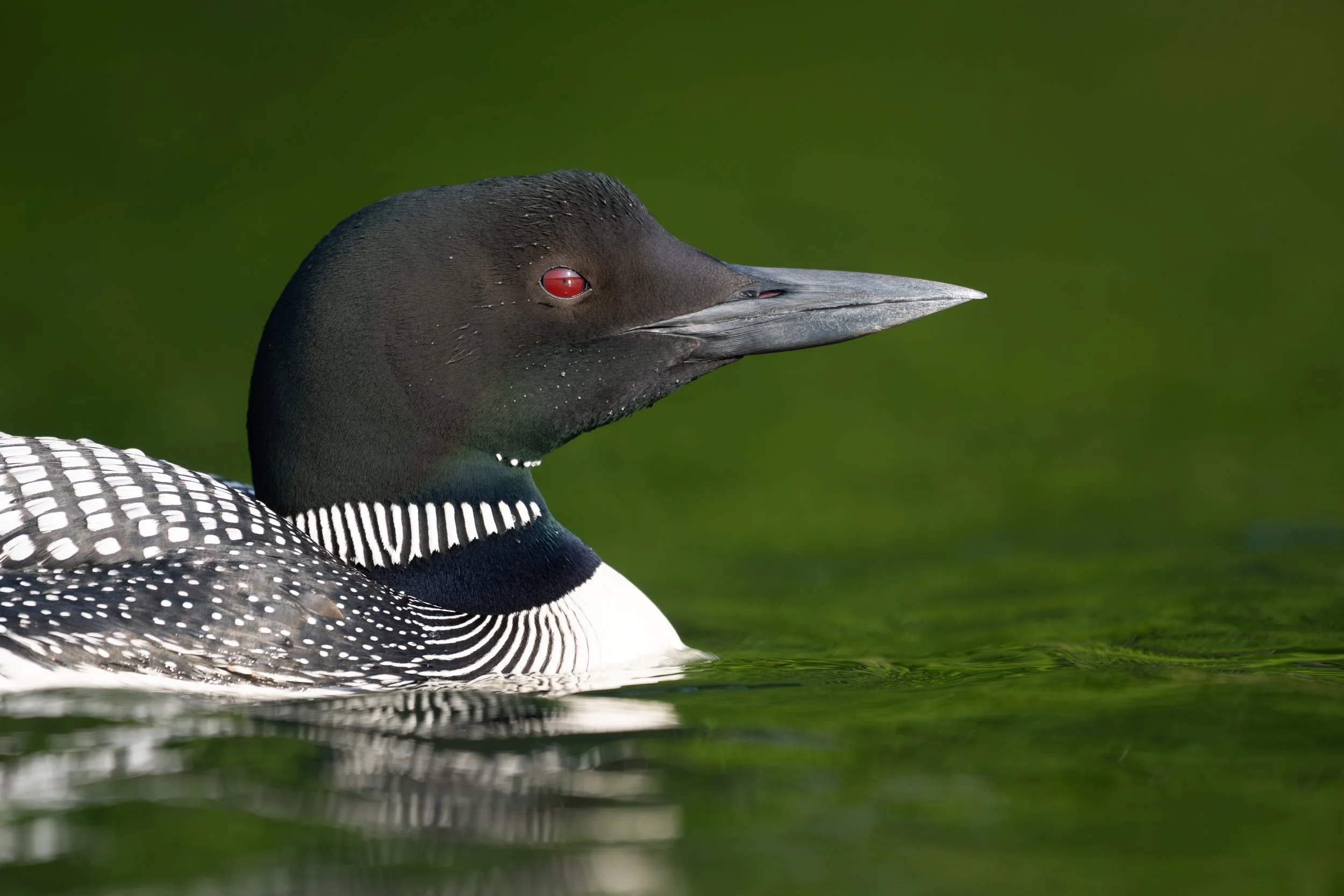
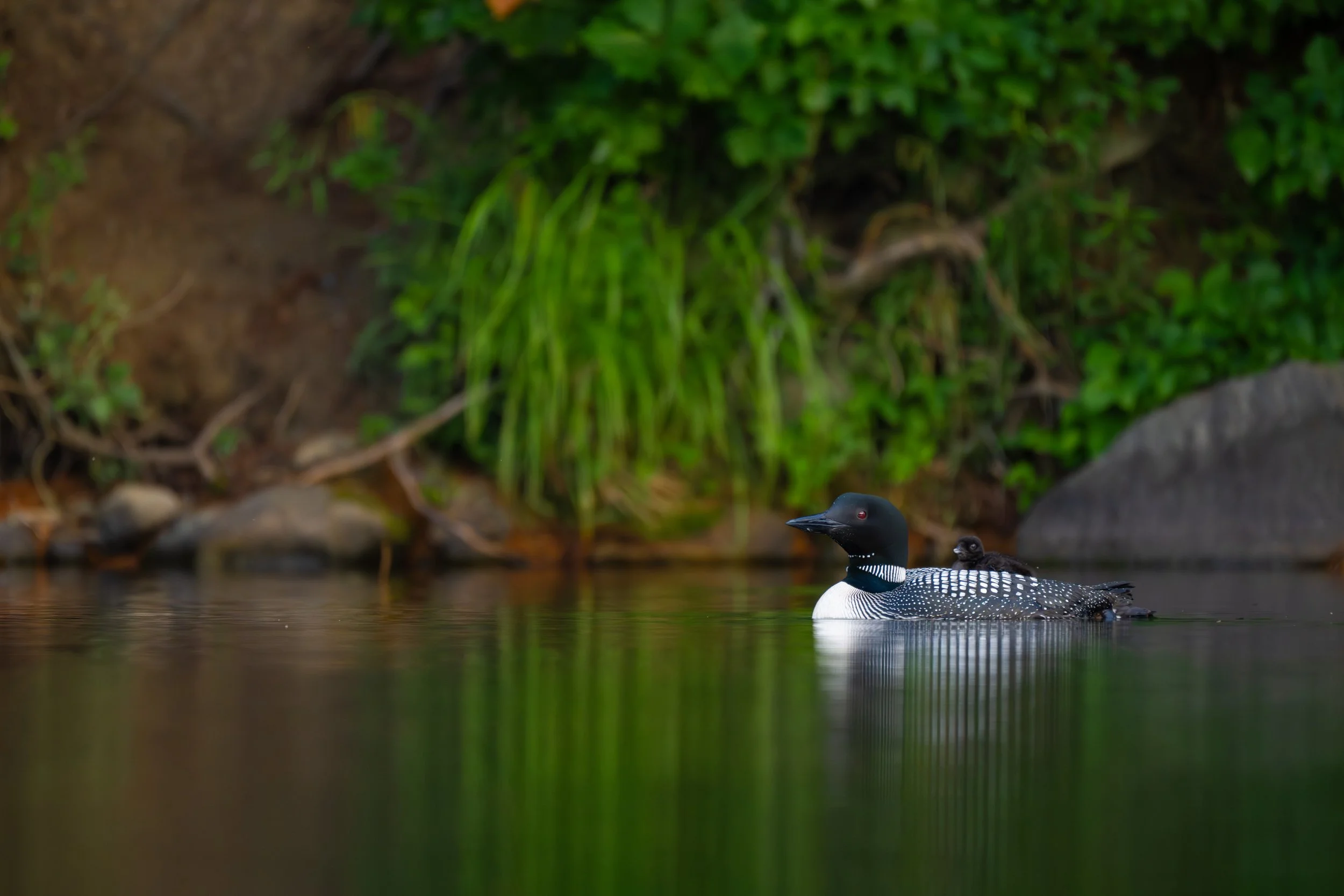
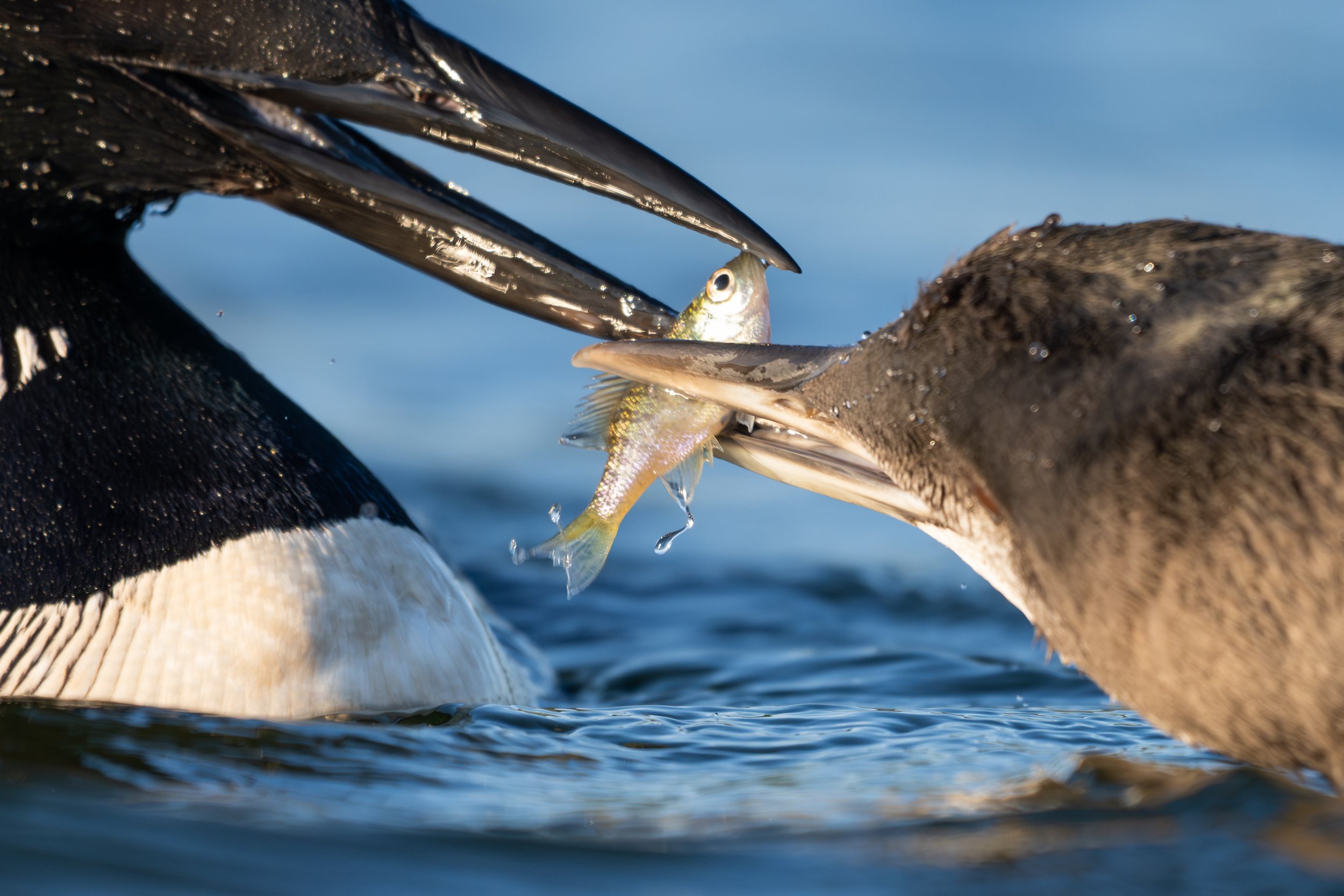
Other Things to Keep in Mind
Be aware of the situations you may be putting these loons in. What do I mean? Loons are very curious birds and I’ve had them occasionally swim so close to me that I could almost touch them (Of course I didn’t try but my heart sure was racing). But this isn’t always the case and sometimes you may be blocking them from moving where they want to go. Loons like to feed along shorelines so many of the times you are photographing them with that shoreline as your backdrop. Realize that you have created a situation where that loon may feel trapped. This is where, hopefully, you can use some of those behaviors you have learned during your “viewing” phase to make your own inference and decide whether it's time to back off so that the loon can return to the center of the lake if it wants to.
Join Me!
Thank you for reading and if you enjoyed this read and want to join me out in the field follow the link below to my contact page!
